L’endogamie chez les Cleenewerck
On s’interesse ici aux unions entre Cleenewerck, c’est a dire entre un homme et une femme dont le patronyme a la naissance
The International Association of the Cleenewerck Families brings together those who bear the name and their loved ones, from Flanders to Belgium, from the Netherlands to the United States, to preserve and share a common history.
To be a “Cleenewerck” (or to bear a variant of the name) is to carry within oneself, perhaps unconsciously, a Flemish soul. For those who stayed in the cradle of the family, it is the desire to share its generous and convivial spirit. For those “in exile,” it is the desire to come back and visit the towns that shaped the family’s history: Hazebrouck, Bailleul, Borre, Méteren, Caëstre…
There are, of course, Cleenewercks who became Belgian or Dutch citizens and still speak the Flemish of our ancestors every day. There is also a growing international diaspora, and the Cleenewerck name has been present in the United States since the Civil War.
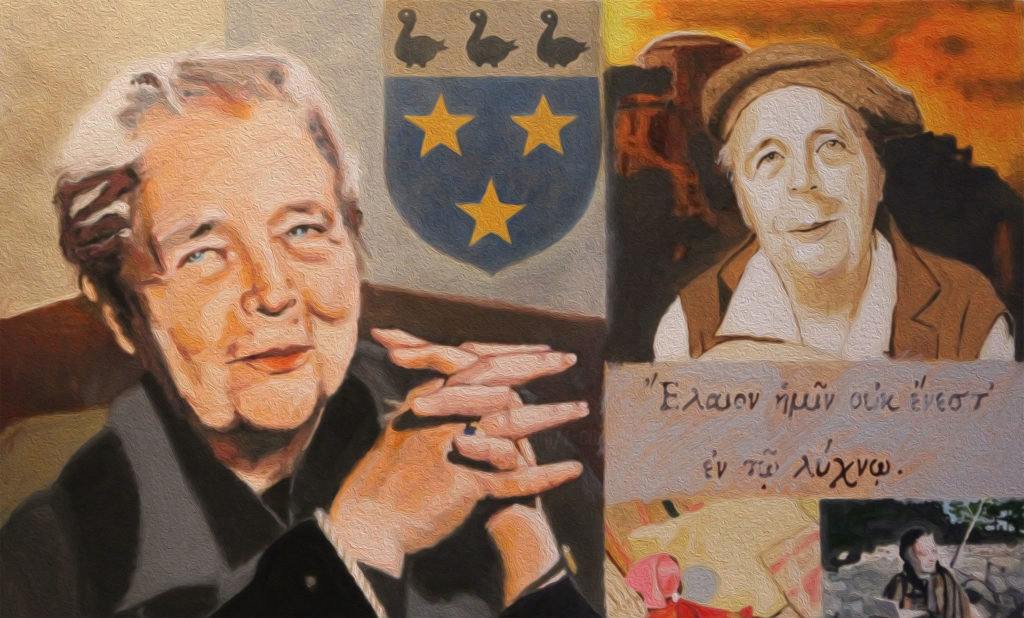
We invite you to discover a vast saga, immortalized by one of the “immortals” of the Académie française: Marguerite Yourcenar, born (as we know!) Marguerite Cleenewerck de Crayencour.
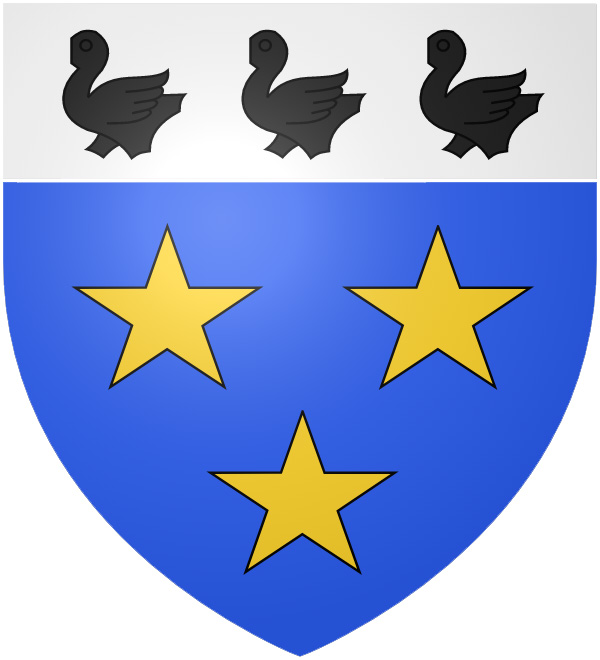
Genealogy, branches, coats of arms and notable figures: a shared heritage, gathered and documented by the Association.
Family trees, genealogical records and sources to find your ancestors and connect the branches.
Cleenewerck de Crayencour, d’Oudenhove and de Kiev: the lines and their stories.
Marguerite Yourcenar, the painter Henry Cleenewerck, the mayors of Hazebrouck…
In her family chronicle, Yourcenar recounts how the Cleenewercks became Cleenewerck de Crayencour through a small fief near Cassel.
Archives du Nord, Le Labyrinthe du monde
The first woman elected to the Académie française, Marguerite Yourcenar brought the memory of her Flemish ancestors back to life in her work. She became an American citizen, like other members of the family who settled far from Flanders.
Those who bear the name know it is a surname one often has to spell out, and that it has variants: Cleenewerk, Cleenwerk and even Cleenewercq!
Marguerite Yourcenar popularized the reading Cleenewerck = Doolittle, or “little worker” (after the work of Louis De Baecker). In reality, Cleenewerck (compare Steenwerck) seems to mean “small (fortified) building.” We read, for instance:
The name Steenwerck comes from modern Dutch, more precisely from the words steen (stone) and werk (work, construction). This etymology refers to a stone construction once built on the site of the village.
In French, a family name does not take the plural, so we speak of “les familles Cleenewerck” (without an “s”), a form that fits reality well. A common ancestor (around 1400) is hardly in doubt, yet for now we identify two branches that have not yet been connected.
It is also a philosophical idea: to be “one family by name” while being, over the centuries, quite distinct families. Our common roots (“five centuries in Flanders”) are strong and, we hope, very much alive. For those who live far from the ancestral lands, our Association is a chance to rebuild this important bond with our roots.
In Archives du Nord, the second volume of Le Labyrinthe du monde, Marguerite Yourcenar describes how, in the eighteenth century, several Flemish families of standing added a French-sounding name to their own: the Cleenewercks became Cleenewerck de Crayencour, after a small fief that came under the court of Cassel. The use of French was then a mark of culture and social rank.
We therefore find the Cleenewerck de Crayencour, but also the Cleenewerck d’Oudenhove and the Cleenewerck de Kiev…
The Association wishes to publish memories of Cleenewercks who have passed away, so that their memory is preserved here for future generations. Please get in touch!
Hazebrouck, Bailleul, Borre, Méteren, Caëstre: the towns that shaped the family's history.
Cleenewercks who became Belgian or Dutch and still speak the Flemish of our ancestors.
The Cleenewerck name has been present in America since the Civil War.
Bearers of the name settled far from Flanders, and more and more abroad.
Our vision is to create a family association that allows those who bear the Cleenewerck name to meet, virtually and, we hope, in person, on the basis of our shared interests and experiences. In northern France, where most Cleenewercks live, it is a typical name everyone can pronounce. Elsewhere, (nearly) every child bearing the name has had to explain its origin, spelling and pronunciation over and over. That, at least, is an experience we all share!
French law now allows a person to take the surname of either parent, which has widened the circle of those who bear the name. There is also the more or less voluntary exile of many Cleenewercks: the best known, Marguerite Yourcenar, became an American citizen; the painter Henry Cleenewerck also traveled widely in America; and the founding president of our association is himself French-American.
Membership is free. Thank you for supporting us, sharing your ideas and contributing to the success of the International Association of the Cleenewerck Families.

On s’interesse ici aux unions entre Cleenewerck, c’est a dire entre un homme et une femme dont le patronyme a la naissance

C’est une question qui fut récemment posée à l’association par un ‘gars des Flandres’ qui se posait des questions sur la page

Voici un lien pour télécharger ce document de 1885 où (en page PDF 378) Cleenewerck est épelé CLEENEWERK (avec aussi la variation

Vers le milieu du XVIIe siècle, se manifeste en Flandre et en France, même à la cour de Louis XIV, une recrudescence

Voici l’article:

Pascal Cleenewerck va commander l’escadron de sécurité routière du Tarn Le capitaine Pascal Cleenewerck, commandant en second de l’escadron départemental de sécurité
Membership is free. Share your memories, your archives and your ideas, and help keep the memory of the Cleenewerck families alive.